

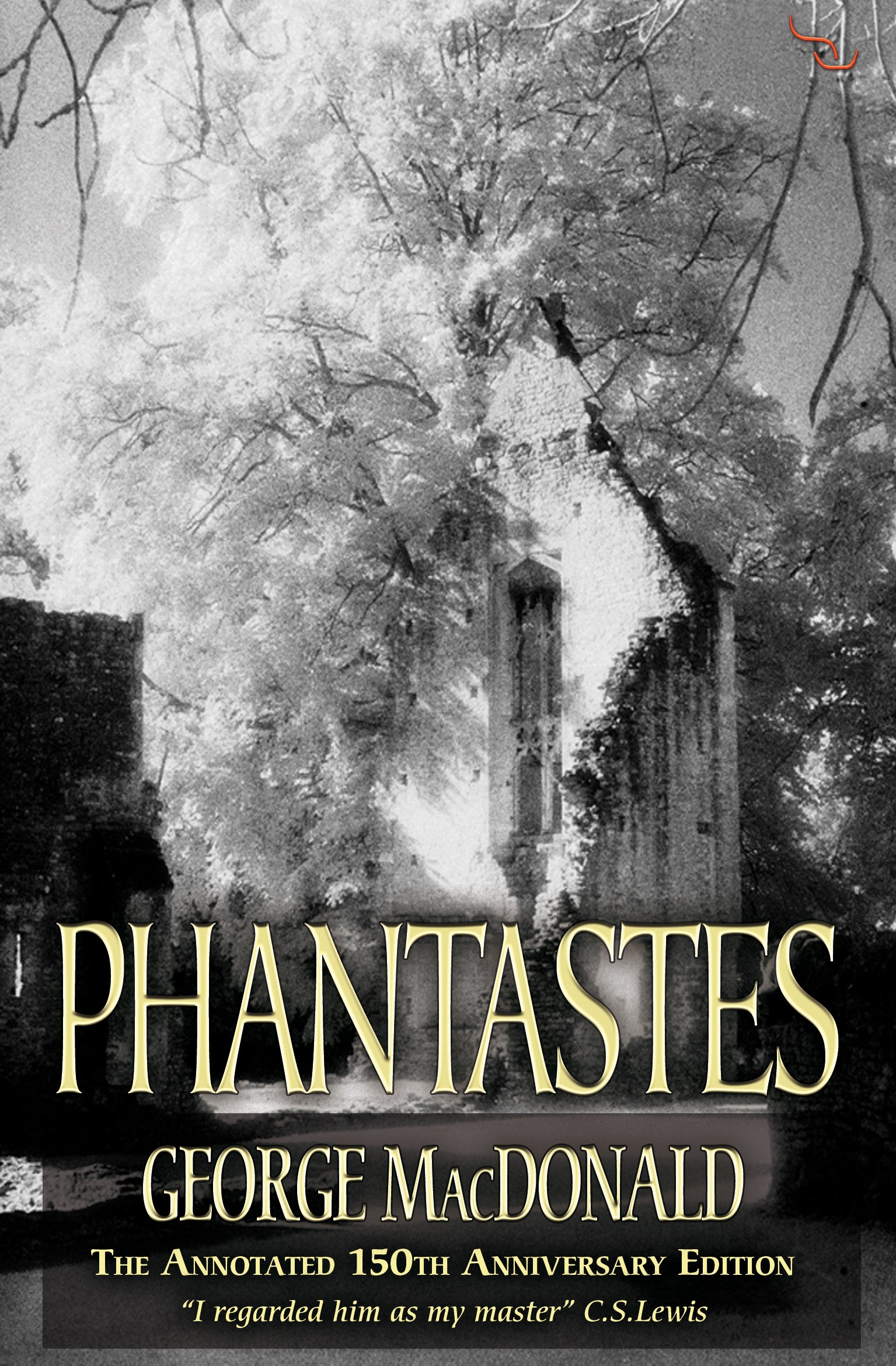
To celebrate the 150th anniversary of its publication in 1858 Paternoster has produced the first ever annotated edition of Phantastes.
Described by MacDonald as a faeries romance for men and women, Phantastes tells the tell of Anodos, a young man who one morning wakes up to find himself in the dreamlike landscape of faerie. Through this landscape he must travel, facing malevolent tree-spirits and fighting giants, dogged all the time by his shadow-self and eventually reaching a climactic act of valour, self-sacrifice and redemption. On his journey he is inspired by a mysterious white lady, befriended by knights, and given strength by the old woman with the young eyes.
Phantastes is a tale about selfishness and self-scarifice, pride and humility, about friendship and fear. Above all it is a novel about death good death death, which is really the start of life.
This new edition also contains 33 line drawings by the pre-Raphaelite artist Arthur Hughes, an illustrated introduction to MacDonalds life and the novel by Nick Page, a reading group study guide, and an appendix of associated works, including The fantastic imagination, MacDonald's 1893 essay on fairy tales.
George MacDonald (1825-1905) was one of the most innovative and original Victorian writers. His work is noted for its visionary theology, rich symbolism and imaginative power.
I regarded George MacDonald as my master; indeed, I fancy I have never written a book in which I did not quote from him. C. S. Lewis
Described by MacDonald as a faeries romance for men and women, Phantastes tells the tell of Anodos, a young man who one morning wakes up to find himself in the dreamlike landscape of faerie. Through this landscape he must travel, facing malevolent tree-spirits and fighting giants, dogged all the time by his shadow-self and eventually reaching a climactic act of valour, self-sacrifice and redemption. On his journey he is inspired by a mysterious white lady, befriended by knights, and given strength by the old woman with the young eyes.
Phantastes is a tale about selfishness and self-scarifice, pride and humility, about friendship and fear. Above all it is a novel about death good death death, which is really the start of life.
This new edition also contains 33 line drawings by the pre-Raphaelite artist Arthur Hughes, an illustrated introduction to MacDonalds life and the novel by Nick Page, a reading group study guide, and an appendix of associated works, including The fantastic imagination, MacDonald's 1893 essay on fairy tales.
George MacDonald (1825-1905) was one of the most innovative and original Victorian writers. His work is noted for its visionary theology, rich symbolism and imaginative power.
I regarded George MacDonald as my master; indeed, I fancy I have never written a book in which I did not quote from him. C. S. Lewis